
A Postcard from a Cliff
Finding Paro Taktsang

Years ago, in a small school nestled among the waves of cornfields that define the Midwest, I saw a picture that took my breath away. A series of whitewashed stone buildings, impossibly perched on a cliff. Emerging from the magazine page, it seemed to be a remnant of another world, steadfastly clinging to the surrounding rock.
I copied that page and placed it in a ‘travel’ folder I carried everywhere. I had no idea where it was or even what it was called, only that I wanted to go.
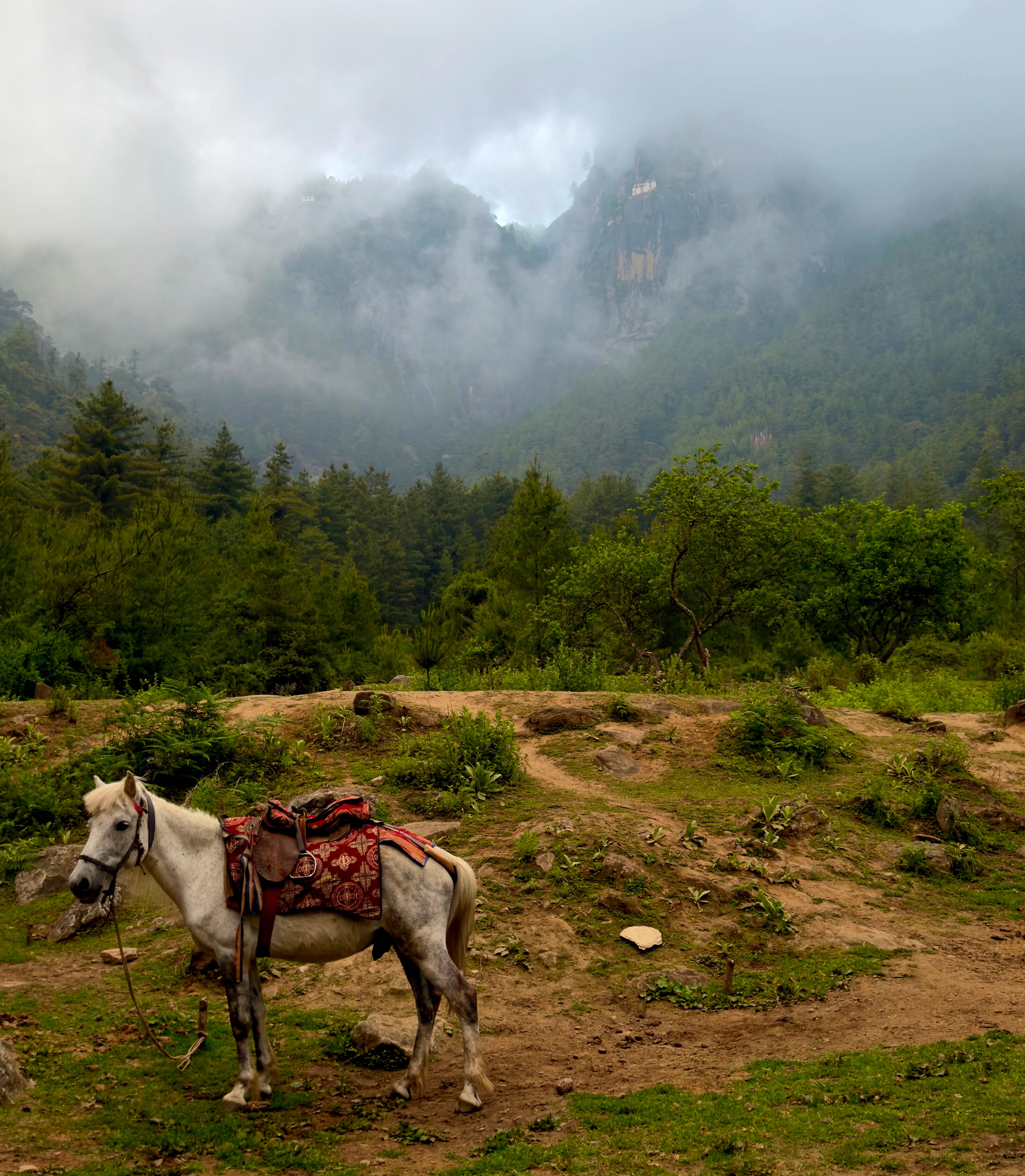
Forty-some years later, that memory came back to me as I gazed upward, finally seeing in person what had been only a magazine page before. Drenched in early-morning fog, I could barely catch a glimpse before it was obscured once again. Still, I could see it was there.
Known around the world as ‘Tiger’s Nest’, this structure has captured imaginations everywhere. ‘Tak’, meaning ‘tiger’, tells the legendary story of a revered 8th-century Buddhist master, known as Padmasambhava, who flew to this mountain cliff on the back of a mystical tigress.


Looking skyward at the impressive cliffs, I cannot help but also wish for a winged ride to the top. Along with the magazine page, my knees are forty years older as well, and I have been flooded with concerns about the steep climb ahead. Altitude is also a factor in this remote Himalayan kingdom of Bhutan, and Paro Taktsang perches just above 3,000 meters (10,000 feet).
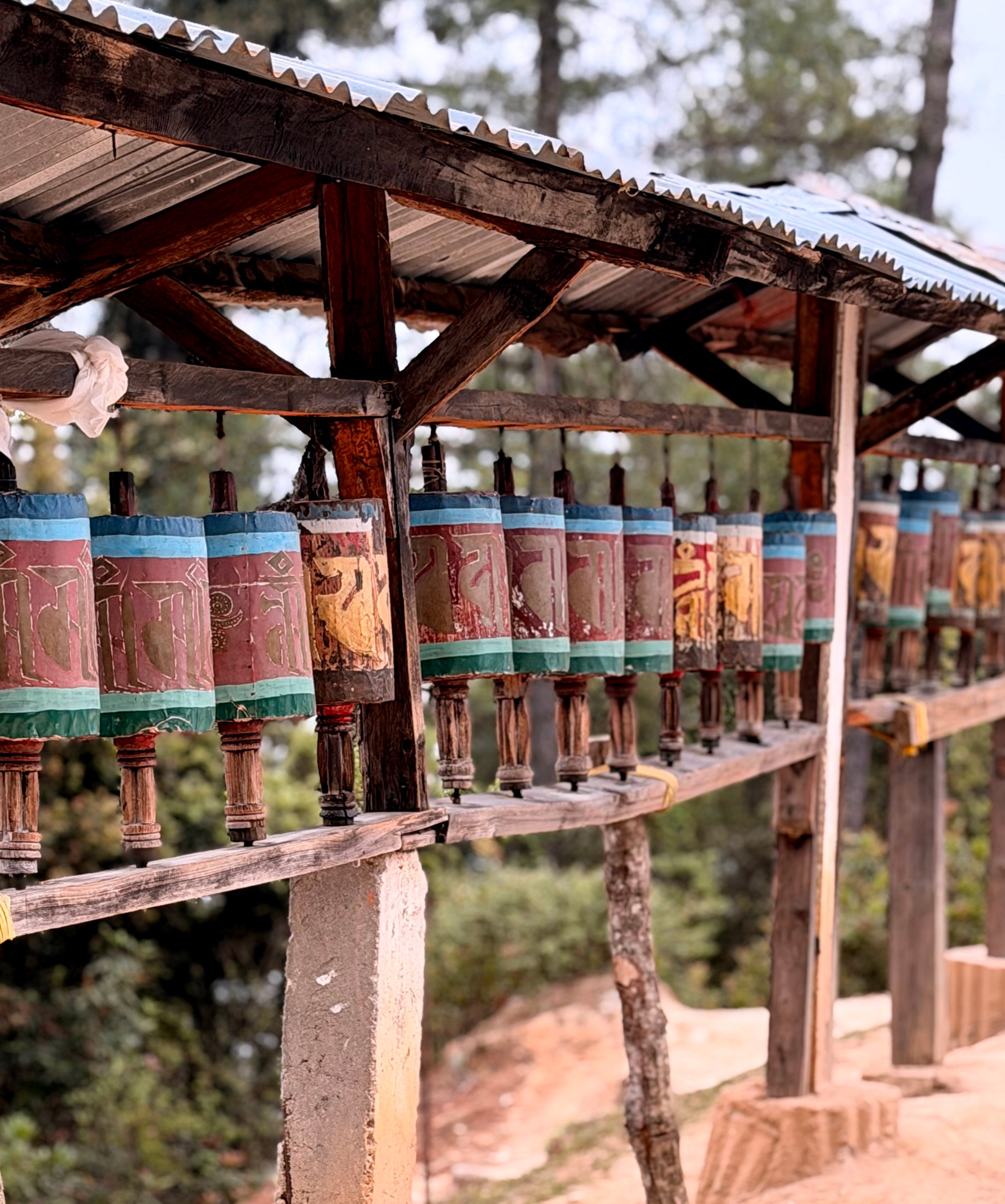
Starting on the trail, we are soon engulfed in dense trees. The sound of water draws my attention. A small mountain stream flows just to the side, powering a prayer wheel that spins continuously, releasing spiritual blessings into the world. A fitting beginning for a hike that, for many, is also a pilgrimage.
As with most compelling and historic sites, there are many layers to be uncovered. The day before, our guide had explained that the name of this place was often lost in translation.
’Nest’, he said, ‘is not an accurate title. The word tsang actually translates to ‘lair’. Its true meaning is Tiger’s Lair.’
I contemplate this as I move slowly upward on the trail, mindful of the altitude. There is quite a difference between the two words. A nest implies a temporary structure, a chosen spot for breeding and hatching eggs. A lair, however, is more permanent, a secluded resting place, a hidden base set among natural formations such as caves, rocks, and crevices.
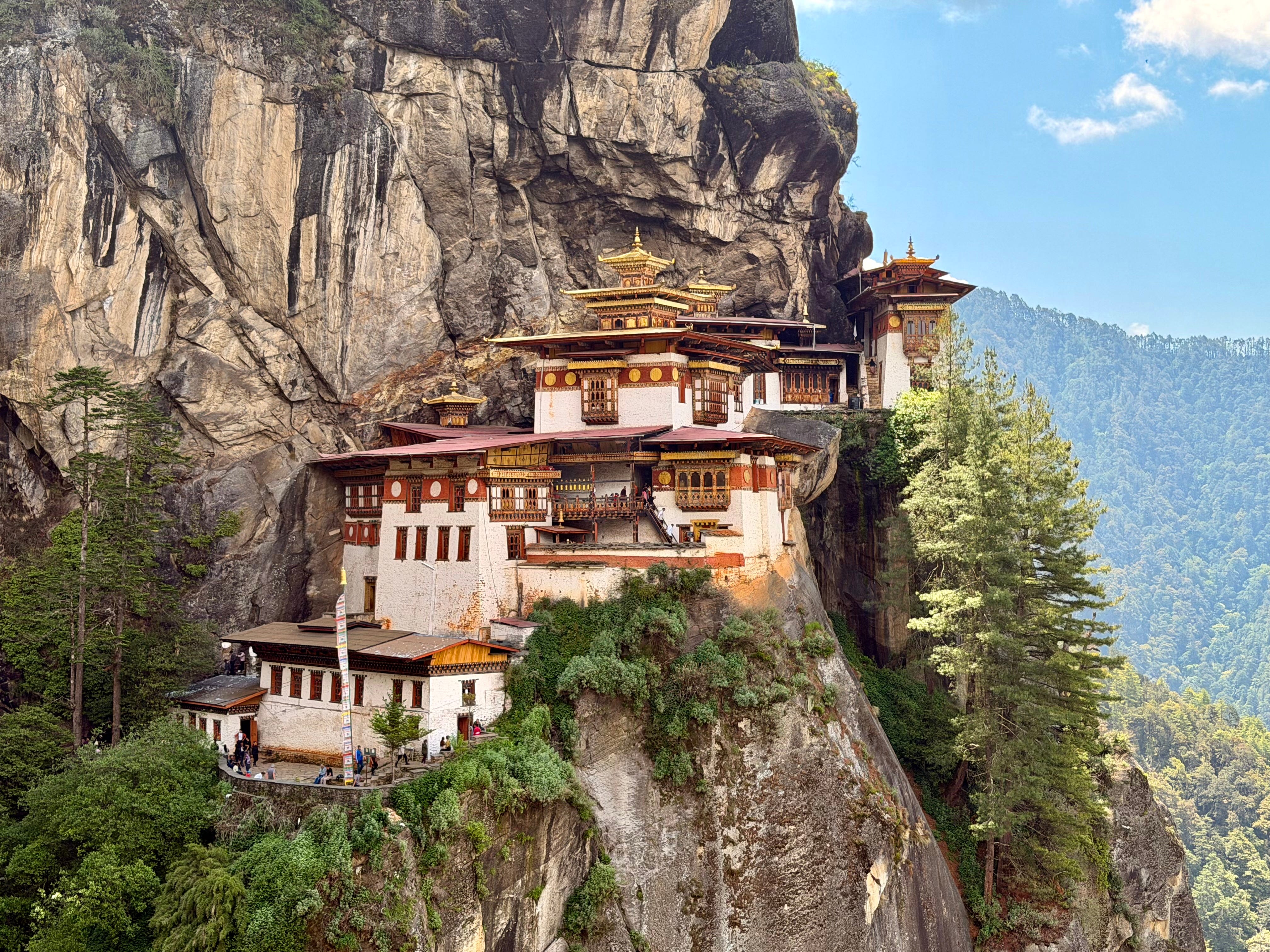
Above me, Paro Taktsang is exactly such a place, a winding, mysterious set of interwoven buildings and caves. When I arrive on the terrace, knees intact, I am immediately enshrouded in that living legend. Somewhere, deep in the interior, I hear chanting and the echo of a horn. A flicker of a red robe in the rocks above.
A nest and a lair tell very different stories. For the first time, the photograph that had captivated me for forty years seems different as well. This place continues to live through ceremony and devotion, extending far beyond these sacred cliffs. A blessing to enter, a doorway, and the promise of even more stories waiting just inside.
Another wonderfully evocative piece, Laurel. You have to take us up there!
What a gorgeous promise this picture you copied 40 years ago! The same happened to me with a picture of a lemur I saw and fell in love with as a child. Decades later I should not only see lemurs in their natural habitat, but have one sitting on my shoulder in Madagascar - a childhood dream came true! Laurel, I can‘t wait to read on about your exploration of this mystical place! And it recalls my reading of one of my favourite stories ever: David Michie’s The Magician of Lhasa and The Secret Mantra.